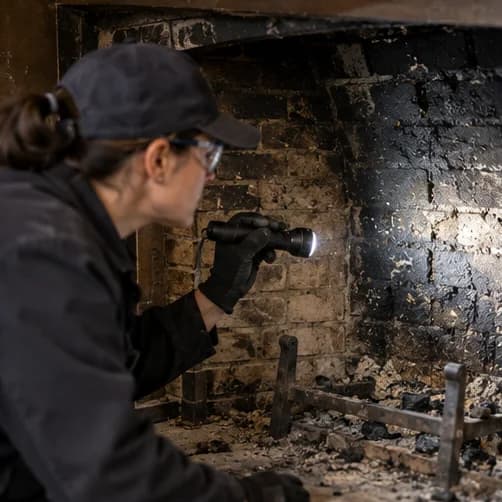
Use this guide to prepare for a conversation with a qualified chimney professional. The right scope depends on the appliance, venting system, building and on-site findings.
Why inspection matters
An inspection checks the visible condition and suitability of the chimney system. It can identify concerns such as damaged masonry, missing caps, deteriorated liners, water entry or a venting configuration that needs closer review.
Match scope to the situation
A routine annual check differs from an evaluation after a chimney fire, a property transfer, a change of appliance or a known performance problem. Ask the contractor to explain the proposed inspection level, the areas they can access and any additional equipment needed.
Read the report carefully
A useful report identifies the appliance and flue, describes the observed condition, distinguishes observations from recommendations and includes photographs where practical. It should state any limitations caused by inaccessible spaces or weather.
Act on findings
Ask which items affect safe use now, which are maintenance issues and which need another trade or specialist. Get a written repair scope before authorizing significant work. A remote directory profile cannot determine whether a chimney is safe to operate.
Events that call for a closer look
A suspected chimney fire, persistent smoke spillage, a new appliance, a change in fuel or a property transfer can change the inspection scope. Explain the event up front. A routine cleaning visit may not answer a question about concealed damage or system compatibility.
Questions about access and tools
Ask whether the proposed inspection includes a camera scan, attic or crawl-space access, roof access and appliance connector checks. These are not automatically part of every visit. The written result should state what was examined, what was inaccessible and what further work would resolve uncertainty.
Make recommendations actionable
Ask the inspector to separate immediate use concerns from preventive maintenance and cosmetic issues. A repair recommendation should name the affected component and observed evidence. If the diagnosis is uncertain, request the next diagnostic step before paying for a broad repair.
Compare the options at a glance
| Item | What it addresses | Question to ask |
|---|---|---|
| Level 1 | Readily accessible evaluation for continued use under unchanged conditions | Does this scope fit the system's history? |
| Level 2 | A more detailed evaluation for relevant changes or events | Which spaces and interior images are included? |
| Level 3 | Further access to investigate a suspected concealed hazard | Why is this access necessary and what will be opened? |
Illustrative homeowner scenario
Field example: two estimates after one inspection
The situation
One report identifies a possible liner concern. A repair company proposes relining, while another asks for additional images before quoting. The homeowner sees different prices but is not sure the companies assessed the same finding.
The useful decision
Send each company the same report and ask them to identify the observation, interpretation and proposed correction separately. If the evidence is incomplete, resolve that question before comparing replacement prices.
The record to keep
Keep the original report and the written explanation from each contractor. A later repair record should refer back to the specific condition it addressed.
Bring this to the appointment
- Appliance make, model and fuel if known
- Safely taken photos of visible concerns
- Dates of prior cleaning, inspections, repairs or incidents
- A request for written findings, scope and exclusions
Questions answered
Chimney service FAQs
What inspection level fits my concern?
Tell the inspector about system changes, a property transfer, a malfunction or a suspected damaging event. Ask the professional to recommend and explain the appropriate level for those circumstances.
Will the report include photos and access limits?
Confirm the report format before booking. Useful documentation identifies the appliance and flue, observed findings, supporting images where appropriate and anything that could not be inspected.
Which findings require action before use?
Ask the inspector to state any use restriction and the steps needed to resolve it. A website or generic checklist cannot decide that for the property.
Is a camera scan enough for a property purchase?
A camera scan is only one possible part of an inspection. Ask for a defined inspection level and the included areas, not simply a camera service label.
Check the source
References & further reading
- CSIA: chimney inspection levels ↗
Inspection scope and events that warrant a deeper evaluation.
- CSIA homeowner resources ↗
Annual inspections, cleaning and homeowner questions.
Prepared by Chimney Sweep Guide editorial. General homeowner information; no claim of an on-site inspection or professional certification. Suggest a correction.