What was actually seen?
Ask for a component, location and supporting image or description. Keep an observation separate from the explanation offered for it.
The homeowner field manual / Evidence desk
Know what was seen. Ask what it means. Agree on the work. Keep the proof.
Use this desk when an inspection report or estimate leaves you with questions. Choose a service, record the wording you want explained and take a tailored question sheet to the contractor.
Build your question sheet ↓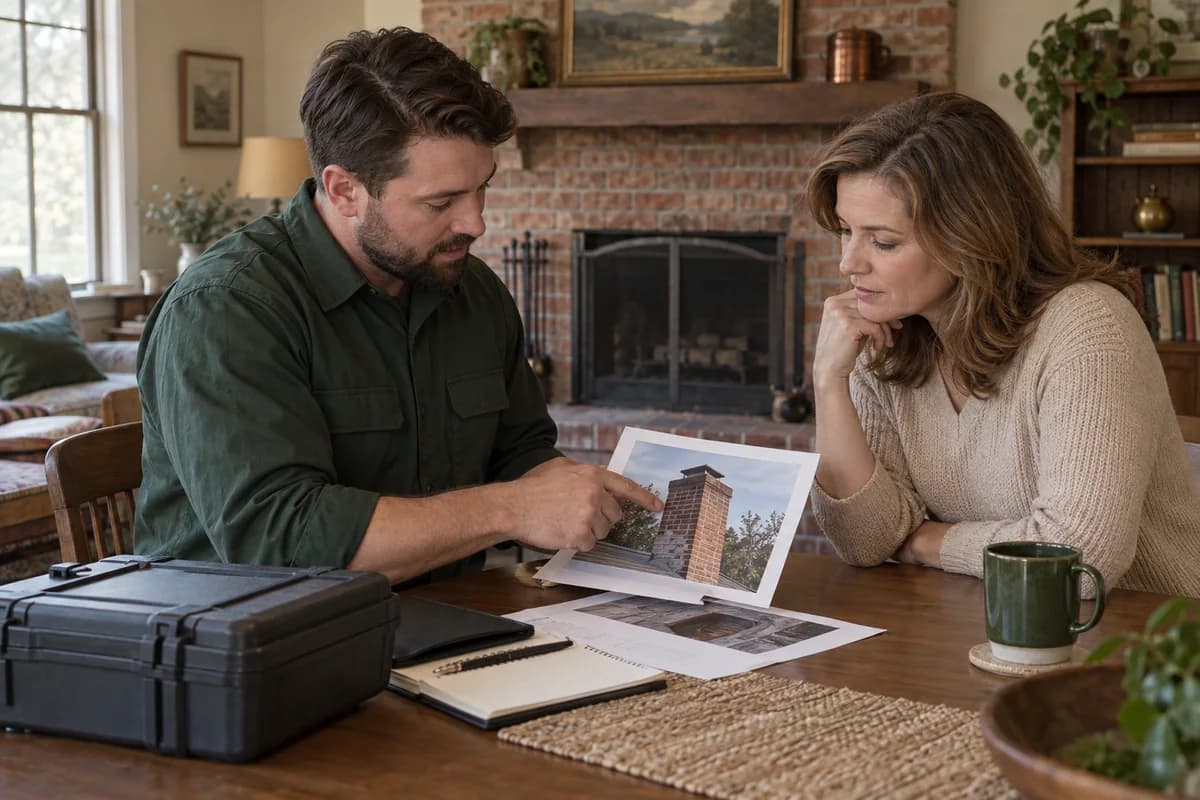
Ask for a component, location and supporting image or description. Keep an observation separate from the explanation offered for it.
A proposal should connect the finding to the remedy, name materials and boundaries, and explain what remains excluded.
Keep the completion record and any unresolved questions. Paying an invoice does not erase a limitation in the original report.
Notes are kept separately for each service while this page stays open. Download before leaving; this tool does not save or send them.
0 / 6,000 characters. Avoid entering private contact details.0 of 4 documentation items marked. This is a paperwork checklist, not a safety or contractor-quality score.
Your conversation plan
Separate the routine cleaning price from extra deposit treatment, animal handling, additional flues and repairs. Ask how a change in scope will be authorized and what documentation accompanies the inspection portion of the visit.
Keep the date, system identity, areas serviced, findings and next steps. Before-and-after images are useful when their locations match; a clean firebox photograph does not document the upper flue.
An inaccessible section remains an open question even if accessible areas were cleaned. Ask what further access or assessment is needed and whether the provider places any restriction on use.
Illustrative wording: “Possible defect at an upper flue joint; access limited. Further evaluation recommended.”
What it establishes: the inspector recorded a concern and a limitation. What it does not establish: the exact repair, a whole-system diagnosis or permission to keep operating. Ask the inspector to identify the image, explain the next assessment and state any restriction on use.
Retain the original language alongside any summary. Your notes help you ask questions; they should not rewrite a qualified professional’s finding.
Learn how to read the complete report →Questions answered
No. It only tracks whether your paperwork addresses four documentation topics. It does not evaluate a chimney, diagnose a defect, verify a company or authorize operation. Ask the inspecting professional to explain any restrictions and next steps.
No. Notes stay in the open page and are not saved by this tool. Download or print before leaving. The downloaded question sheet belongs to you; you decide whether to share it.
Create a separate downloaded sheet for each appliance or flue and identify it in your notes. Clear the current service before preparing a second appliance’s sheet. This prevents a finding for one system from being mistaken for a finding about another.
Ask each to identify the finding, supporting evidence, proposed method and limitations in writing. Compare the actual scope and seek a further qualified assessment when an important condition remains disputed. This tool cannot decide which technical diagnosis is correct.
Editorial question prompts, not professional inspection advice. For an active chimney fire, a carbon-monoxide alarm or suspected CO emergency, leave the building and contact emergency services. Official safety resources.