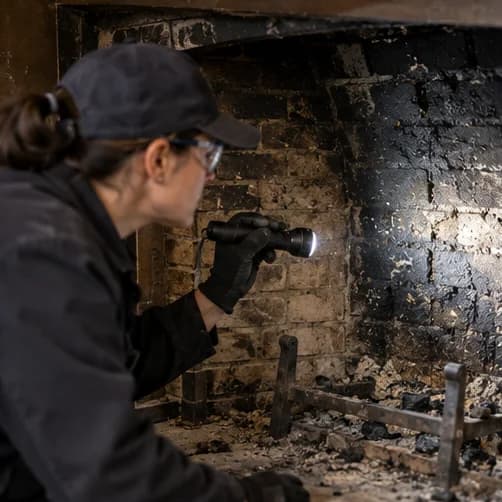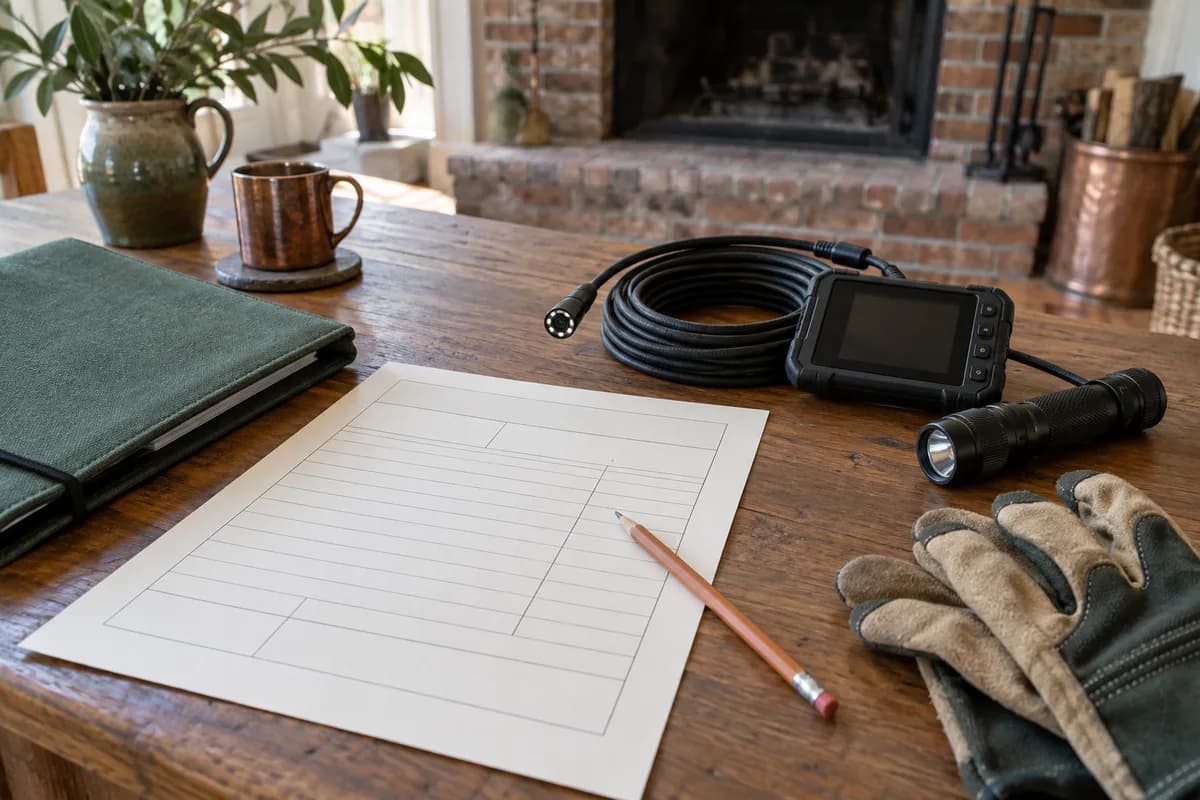
Use this guide to prepare for a conversation with a qualified chimney professional. The right scope depends on the appliance, venting system, building and on-site findings.
Request chimney-specific records
Ask for available inspection reports, cleaning dates, manuals and repair invoices. A general home inspection may have a different scope from a chimney inspection. Clarify which systems were evaluated and what limitations were recorded. Missing records should remain explicitly unknown rather than be interpreted as proof of regular maintenance.
Discuss a property-transfer inspection
Tell a qualified chimney inspector that the property is changing hands. Industry inspection guidance identifies a property transfer as a reason for Level 2 assessment. Ask what the agreed scope includes and coordinate access through the relevant property contacts; requirements and transaction decisions need advice appropriate to the property.
Identify each appliance and flue
A home may have a fireplace, an insert or another appliance connected to venting that is not obvious from the room. Request clear identification and manuals. Do not infer that a decorative fireplace is usable, that a previous fuel conversion was appropriate or that all flues share the same condition.
Make unresolved findings explicit
Record inaccessible areas, missing product information and recommended further work. Request written scopes for repairs instead of relying on an allowance described only as chimney work. Discuss transaction questions with the appropriate advisers; the directory does not determine contractual obligations or who should pay.
Build the first-year record
After taking possession, keep the final report, repair documents and appliance instructions together. Obtain professional clarification of any conditions affecting use. Set up a service history from the known facts rather than inventing a last-cleaned date. This becomes the starting record for subsequent maintenance.
Request the full record before the handover
Ask for chimney inspection reports, service invoices, appliance manuals and any available installation or alteration paperwork. A seller’s statement that the fireplace was rarely used is useful history, not a condition assessment. Check that documents identify the correct system and date. If there are multiple fireplaces, ask which one each record concerns. Preserve missing information as a question for the inspector rather than filling the gaps from appearance or a listing photograph.
Coordinate the inspection and any transaction deadline
Explain that the visit concerns a property transfer and ask the chimney professional what scope is appropriate. Confirm the report delivery date and access arrangements with the parties managing the property. Avoid asking for a predetermined ‘pass’ document. The useful output is a clear assessment with findings and limitations that can inform your decisions. If a concern needs further investigation, ask what additional access and authorization are required and who can arrange them.
Create a baseline before the first fire
Once you receive the professional findings, record the appliance identity, recommended work and any restriction on operation. Keep the original report even after a repair is completed. Add the completion documents as a new entry rather than replacing the earlier evidence. This creates an understandable starting point for your ownership and prevents the next provider from having to reconstruct what happened during the purchase.
Make a contractor question sheet →
Compare the options at a glance
| Item | What it addresses | Question to ask |
|---|---|---|
| Request chimney-specific records | Ask for available inspection reports, cleaning dates, manuals and repair invoices. | What does the written scope or record establish about this step? |
| Discuss a property-transfer inspection | Tell a qualified chimney inspector that the property is changing hands. | What does the written scope or record establish about this step? |
| Identify each appliance and flue | A home may have a fireplace, an insert or another appliance connected to venting that is not obvious from the room. | What does the written scope or record establish about this step? |
Practice the decision
Put the questions in context
Follow an explicitly illustrative homeowner situation through the observations, investigation and scope questions. No customer result or price is assumed.
Explore the homeowner decision notebook →Bring this to the appointment
- Appliance make, model and fuel if known
- Safely taken photos of visible concerns
- Dates of prior cleaning, inspections, repairs or incidents
- A request for written findings, scope and exclusions
Questions answered
Chimney service FAQs
Does a general home report include a chimney inspection?
Check its written scope. Do not assume it includes internal chimney examination or the same access as a dedicated chimney inspection.
Can the seller’s cleaning invoice establish condition?
It records the work described on that invoice. Ask for a condition report and limitations rather than treating cleaning as evidence about all concealed components.
What if access is restricted before purchase?
Discuss access and timing with the relevant parties and document the unresolved areas. The directory cannot settle transaction obligations.
When should I create the new service history?
Start with the documents you receive and mark gaps as unknown. Add inspections and completed repairs as separate dated entries.
Check the source
References & further reading
- CSIA: chimney inspection levels (historical overview, 2000) ↗
Historical background on inspection levels; not the current code text. Confirm the applicable edition and scope with the inspecting professional.
Published by Chimney Sweep Guide. General homeowner information; no claim of an on-site inspection or professional certification. Suggest a correction.