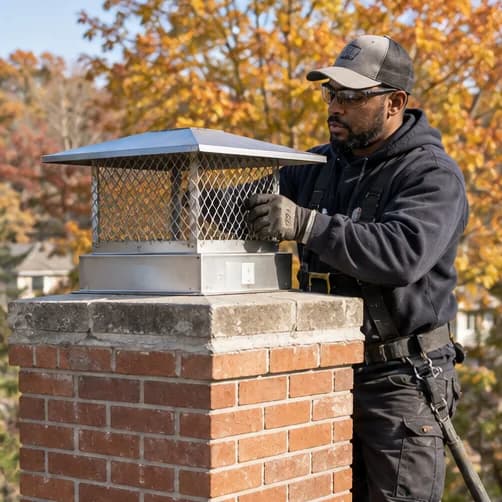
Use this guide to prepare for a conversation with a qualified chimney professional. The right scope depends on the appliance, venting system, building and on-site findings.
Follow the water path
A stain near the fireplace can originate at a cap, crown, flashing, roof penetration or porous masonry. Water may travel before it becomes visible indoors. Record when the stain appears and photograph the roofline from a safe location.
Separate diagnosis from treatment
A water-repellent coating does not fix missing flashing or an open crown crack. Ask the contractor to identify the suspected entry point and explain how each proposed repair addresses it. Roof and chimney trades may both be needed.
Evaluate masonry proposals
For tuckpointing, rebuilding or crown work, compare the affected area, materials, access method and finish. Ask what is excluded and how the work will be documented. A written scope makes proposals easier to compare.
Prevent repeat damage
After repairs, monitor for new staining during rain and snowmelt. Keep gutters and nearby drainage in mind, and schedule a follow-up if the leak persists. Moisture trapped in masonry can worsen during freeze-thaw cycles.
Track the symptom
Note whether water appears during wind-driven rain, prolonged rain, snowmelt or only when the appliance is used. That timing helps distinguish roof and chimney water entry from condensation or another source. Do not climb a roof to investigate; photos from the ground and interior are enough to start the conversation.
Understand repair layers
A cap keeps direct precipitation and animals out of the opening. A crown sheds water from the top of masonry. Flashing seals the roof intersection, while mortar and brick form the chimney exterior. A quote should identify the failed layer rather than bundle unrelated products without a diagnosis.
Review the estimate and follow-up
Ask what surface preparation, material, access equipment and cleanup are included. If masonry is rebuilt, request the extent of demolition and how adjacent roof surfaces will be protected. After repair, save photos and monitor the area through later storms so any remaining issue can be traced.
Make a weather-and-symptom log
Record when water or staining appears, where it is visible and whether you noticed it during rain or afterward. Take pictures from a safe location and use the same angle for later comparisons. Share the observations without labeling the cause as a cap, crown or flashing failure unless a professional has established that finding. The purpose of the log is to preserve timing and location. It does not require climbing onto the roof, opening finishes or recreating a leak.
Ask each trade to define its boundary
A roof junction, masonry repair and interior restoration may involve different providers. Ask who investigates the pathway, who performs the proposed exterior work and who documents the result. If the estimate excludes roofing, ask what happens when roofing needs to be disturbed. If it excludes brickwork, ask whether the planned flashing work depends on sound masonry. Resolve these interfaces before booking so each company does not assume another party is responsible for an unfinished part of the repair.
Plan the follow-up before the repair
Ask what observations to keep if the symptom recurs and how to contact the company. Save the written scope and completed-work photographs alongside the original stain images. A return visit is easier to evaluate when everyone can see which pathway was addressed and which possibilities were excluded. Avoid treating a dry completion day as evidence of performance through every later weather condition.
Make a contractor question sheet →
Compare the options at a glance
| Item | What it addresses | Question to ask |
|---|---|---|
| Cap | The flue opening | Is the opening protected by a compatible termination? |
| Crown | Top of the masonry around the flue | Is water being shed away from vulnerable surfaces? |
| Flashing | Roof-to-chimney intersection | Who assesses the joint and adjacent roof covering? |
| Masonry | Brick, stone and mortar exterior | What deterioration is visible and what caused it? |
Illustrative homeowner scenario
Field example: a leak that returns after a new cap
The situation
A cap was replaced, but a ceiling stain reappears during wind-driven rain. The homeowner assumes the cap is defective and asks for another one.
The useful decision
Give the next contractor the cap invoice and a weather timeline. Ask for investigation of the remaining water paths, including the roof intersection and masonry. The new symptom history helps avoid repeating an unrelated repair.
The record to keep
Store before-and-after photos, the identified entry point and responsibility for each component. Keep interior cosmetic work separate from resolving the moisture source.
Bring this to the appointment
- Appliance make, model and fuel if known
- Safely taken photos of visible concerns
- Dates of prior cleaning, inspections, repairs or incidents
- A request for written findings, scope and exclusions
Questions answered
Chimney service FAQs
Where is water entering my chimney?
The visible stain cannot identify the entry point by itself. Ask a professional to assess the cap, crown, masonry, flashing and adjacent roof as relevant to the symptom.
Is roofing work included in a chimney repair?
Not automatically. The written scope should identify the roof intersection work, the trade performing it and any surrounding roof repair that is excluded.
How should a leak repair be followed up?
Ask for completion photos and instructions for reporting recurring moisture. Keep a dated record of later rain or snowmelt and any new staining.
Does waterproofing replace crown or flashing repair?
A treatment and a physical repair address different conditions. Ask the contractor to explain the water path and why each proposed step is necessary.
Check the source
References & further reading
- CSIA: water and chimney damage (historical article, 2013) ↗
Rain entry, caps and flashing.
Published by Chimney Sweep Guide. General homeowner information; no claim of an on-site inspection or professional certification. Suggest a correction.