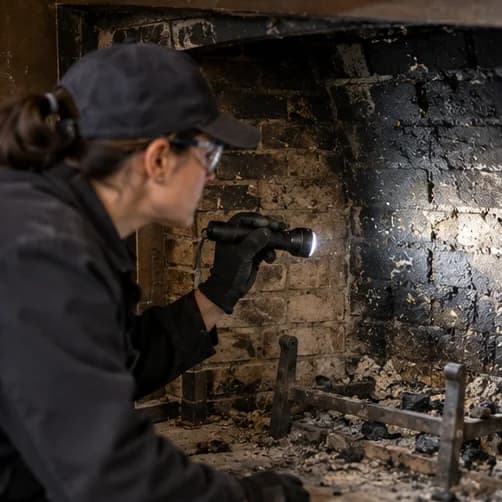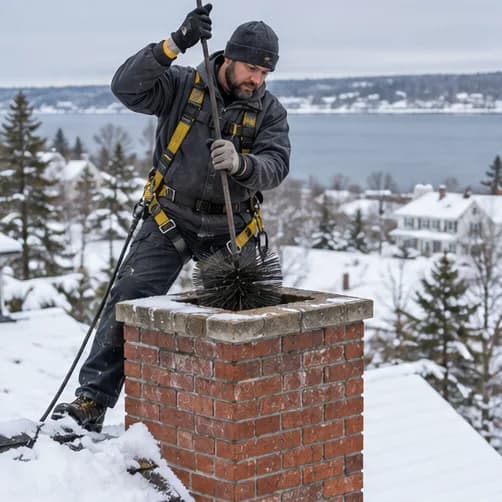
Identify the deposit
A dark surface alone does not tell a homeowner its depth, composition or condition. Ask for photographs and an explanation of the affected section. A treatment quote should identify the deposit it is intended to address.
Check method compatibility
The appliance, liner material, condition and access affect suitable methods. Ask why the proposed equipment or treatment is appropriate for this system and how the contractor will avoid damaging vulnerable components.
Allow for more than one step
Some deposits require staged work or a return assessment. Get the included visits and the criteria for further work in writing. An initial price should not be mistaken for an unlimited promise to remove every deposit.
Check the result
Ask what evidence will show the treated area and whether the underlying surface can now be inspected. Removal does not repair cracks or other defects that become visible afterward.
Discuss the operating history
Share fuel, use pattern and recurring symptoms so the professional can assess contributing factors. A cleaning product should not replace professional inspection and necessary mechanical cleaning. Keep the findings with the service record.
The evidence desk / Worked example
From a finding to a defensible scope
Illustrative homeowner scenario. This is not an actual inspection report or a prescription for your property.
A sweep says a hard deposit remains after routine brushing and offers an additional treatment.
Ask what was observed and where before evaluating the proposed method. The names used for deposits are not a substitute for evidence. A product application and successful removal are different milestones, and a treatment may require a follow-up visit to evaluate the result.
Ask for the missing evidence
- Request a location-specific description of the remaining deposit.
- Ask why the routine method did not address it.
- Ask how compatibility, follow-up and the result will be evaluated.
Before authorizing the work
The written proposal should distinguish treatment, removal of loosened material, repeat visits and inspection. Ask whether the price is for one attempt or a defined completion scope, and how damage discovered beneath deposits will be handled.
At completion
Keep the method recorded by the professional, follow-up findings and any areas where deposits remain. Store appliance restrictions and instructions with the report.
Keep this question open
Do not treat an additive, a receipt or a cleaner-looking opening as proof that the venting path is ready for use. Ask the professional what the completed assessment supports.
The scope checklist
Use these items to compare written proposals for this service.
- Identify the deposit
- Check method compatibility
- Allow for more than one step
- Check the result
- Discuss the operating history
Common exclusions to clarify
- Related appliance or building repairs unless expressly included
- Additional access or return visits outside the agreed scope
- Independent guarantees of future safe operation
Questions answered
Chimney service FAQs
When should I ask about creosote removal?
Hard or glazed deposits can require a different professional removal approach from loose soot. Ask the sweep to document the material and its location before authorizing specialist treatment. Never try to remove deposits by deliberately making a hotter fire.
What should be recorded before work starts?
A dark surface alone does not tell a homeowner its depth, composition or condition. Ask for photographs and an explanation of the affected section. A treatment quote should identify the deposit it is intended to address.
What should I keep after the visit?
Share fuel, use pattern and recurring symptoms so the professional can assess contributing factors. A cleaning product should not replace professional inspection and necessary mechanical cleaning. Keep the findings with the service record.
Check the source
References & further reading
- CSIA homeowner resources ↗
Annual inspections, cleaning and homeowner questions.
Published by Chimney Sweep Guide. General homeowner information; no claim of an on-site inspection or professional certification. Suggest a correction.