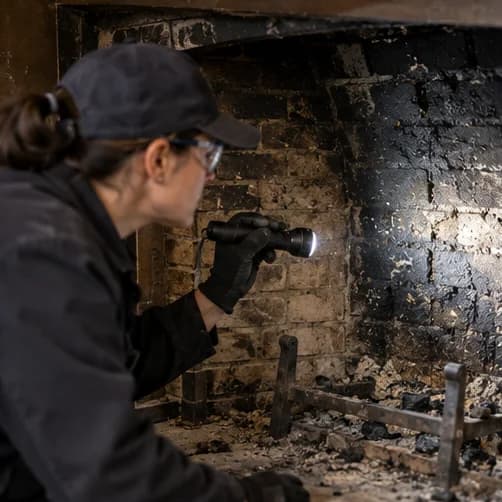
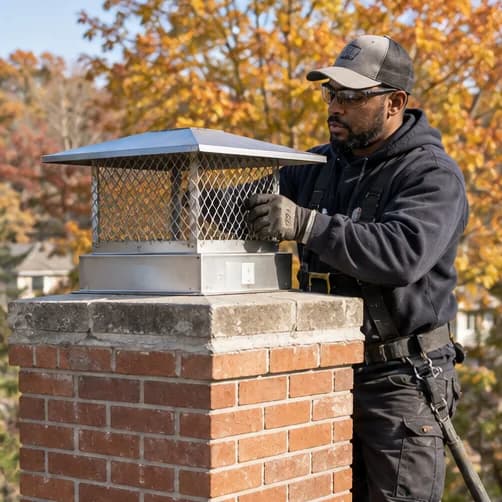
Use this guide to prepare for a conversation with a qualified chimney professional. The right scope depends on the appliance, venting system, building and on-site findings.
Treat the history as unknown
An attractive firebox does not reveal the condition of a concealed flue or connector. Record what is known about the last use, any disconnection and later building work. If the system was intentionally taken out of service, try to locate the reason and any existing report before discussing reuse.
Identify the actual system
Ask a suitable professional to identify the appliance and venting arrangement. Find an accessible model label and manual where possible. A replacement door, insert or gas conversion can change the questions. Do not assume compatibility based on appearance or on what another fireplace in the neighborhood uses.
Book assessment before operation
Describe the long period without use and ask which inspection scope addresses that history. Cleaning may be necessary, but sweeping alone does not establish that every relevant component is sound. Tell the company about animal sounds, debris, stains and any visible damage without approaching an unsafe area.
Plan for staged work
The first appointment may identify a need for further access, cleaning, specialist appliance service or repair. Request the findings and next steps in writing. Let the inspection define the work rather than purchase a package of speculative repairs. Ask who can answer any questions outside the attending technician’s scope.
Keep the decision to resume use clear
Do not light a test fire to see whether smoke comes out correctly. Resolve the professional findings, follow the appliance instructions and keep the completion record. If a carbon-monoxide alarm, smoke accumulation or fire concern occurs, leave the property and contact emergency services.
Reconstruct the last known use
Write down when the fireplace was last used, why it stopped being used and whether the appliance, fuel or building changed during that time. If you inherited the uncertainty, say so. Look for accessible model labels and existing paperwork, but do not dismantle or test the system to obtain answers. Tell the company about debris, animal noises, water marks or odors you have observed from a safe location. These details help it plan an appropriate assessment.
Avoid turning the first fire into a diagnostic test
A small trial fire does not provide a reliable condition report and can expose an unresolved problem. Ask the professional what must be evaluated before operation and what the resulting report establishes. If the visit leaves an inaccessible area or open concern, ask for a clear next step and any restriction on use. Restarting should follow the resolved assessment and applicable appliance instructions, not an assumption that a long-unused system cannot contain deposits or deterioration.
Record the return-to-service decision
Keep the assessment, completed work and operating instructions in one folder. Note the date and the exact system addressed. If the professional recommends another trade or further inspection, leave that item visible as outstanding. Future maintenance planning should start from this documented baseline rather than from the first evening the fireplace was used again.
Make a contractor question sheet →
Compare the options at a glance
| Item | What it addresses | Question to ask |
|---|---|---|
| Treat the history as unknown | An attractive firebox does not reveal the condition of a concealed flue or connector. | What does the written scope or record establish about this step? |
| Identify the actual system | Ask a suitable professional to identify the appliance and venting arrangement. | What does the written scope or record establish about this step? |
| Book assessment before operation | Describe the long period without use and ask which inspection scope addresses that history. | What does the written scope or record establish about this step? |
Practice the decision
Put the questions in context
Follow an explicitly illustrative homeowner situation through the observations, investigation and scope questions. No customer result or price is assumed.
Explore the homeowner decision notebook →Bring this to the appointment
- Appliance make, model and fuel if known
- Safely taken photos of visible concerns
- Dates of prior cleaning, inspections, repairs or incidents
- A request for written findings, scope and exclusions
Questions answered
Chimney service FAQs
Can I light a small test fire first?
Do not use a trial fire to assess an unfamiliar or potentially unsafe system. Arrange an appropriate professional assessment before reuse.
Does a decorative cover mean the flue is closed safely?
Appearance cannot establish how a system was disconnected or what work is necessary for reuse. Ask a qualified professional to identify the actual arrangement.
Should I order a sweep or restoration?
Describe the history and intended use first. Inspection findings should define whether cleaning, repair, appliance service or further investigation is needed.
What if animals may be inside?
Do not light a fire, seal the opening or attempt removal yourself. Ask about wildlife restrictions and the appropriate professional response.
Check the source
References & further reading
- U.S. Fire Administration: heating fire safety ↗
Fireplace and heating safety reminders.
Published by Chimney Sweep Guide. General homeowner information; no claim of an on-site inspection or professional certification. Suggest a correction.