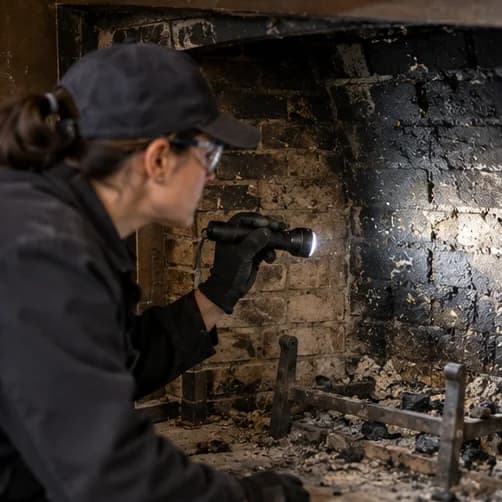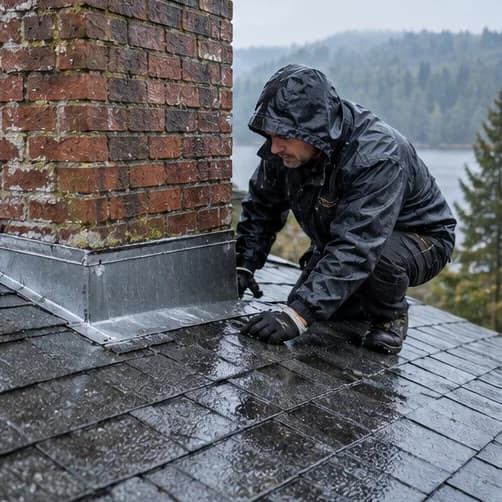
Record when water appears
Note rain timing, wind direction if known, room location and previous roof work. Use observations already available; do not flood the roof or open construction to reproduce a leak yourself.
Clarify trade responsibilities
Ask whether a chimney specialist, roofer or coordinated team will examine the roof junction. Whoever proposes the work should explain the boundaries between the roofing and masonry tasks.
Distinguish sealant from repair
A bead of sealant may have a different purpose and service expectation from replacing a failed assembly. Ask what failed and how the proposed materials and connections address that failure.
Protect the roof
Roof pitch, height, surface and surrounding access influence the work plan. Confirm how the roof will be protected and what happens if deteriorated adjoining material is discovered.
Agree a follow-up process
Keep photographs and the written scope. Ask how persistent water entry will be investigated, what warranty applies to the performed work and which other potential pathways were outside the assessment.
The evidence desk / Worked example
From a finding to a defensible scope
Illustrative homeowner scenario. This is not an actual inspection report or a prescription for your property.
A leak estimate says ‘seal around chimney’ without identifying the roof-junction detail.
Ask the provider to explain the observed water-entry pathway and the proposed work at the roof-to-chimney connection. A temporary seal, localized repair and replacement flashing detail are different commitments. The estimate needs to describe the chosen approach rather than rely on the word ‘seal.’
Ask for the missing evidence
- Locate the suspected entry point and supporting observations.
- Ask which roof and chimney junction components are involved.
- Clarify who handles roofing disturbed during access.
Before authorizing the work
Specify removal or preparation, replacement materials where applicable, roof restoration, access and follow-up terms. If a roofer and chimney contractor share the work, agree on the interface between their scopes before either job starts.
At completion
Request photographs of the work before concealed details are covered, along with final views and any applicable warranty conditions. Keep the original leak observations for comparison.
Keep this question open
A dry day at completion cannot demonstrate performance through every later rain event. Ask what to document and who to contact if the original symptom returns.
The scope checklist
Use these items to compare written proposals for this service.
- Record when water appears
- Clarify trade responsibilities
- Distinguish sealant from repair
- Protect the roof
- Agree a follow-up process
Common exclusions to clarify
- Related appliance or building repairs unless expressly included
- Additional access or return visits outside the agreed scope
- Independent guarantees of future safe operation
Questions answered
Chimney service FAQs
When should I ask about chimney flashing repair?
Flashing manages water at the roof and chimney intersection. Staining near a chimney can involve this junction, roofing, masonry or other pathways. A flashing quote should follow an assessment rather than be inferred from the position of a stain alone.
What should be recorded before work starts?
Note rain timing, wind direction if known, room location and previous roof work. Use observations already available; do not flood the roof or open construction to reproduce a leak yourself.
What should I keep after the visit?
Keep photographs and the written scope. Ask how persistent water entry will be investigated, what warranty applies to the performed work and which other potential pathways were outside the assessment.
Check the source
References & further reading
- CSIA: water and chimney damage (historical article, 2013) ↗
Rain entry, caps and flashing.
Published by Chimney Sweep Guide. General homeowner information; no claim of an on-site inspection or professional certification. Suggest a correction.