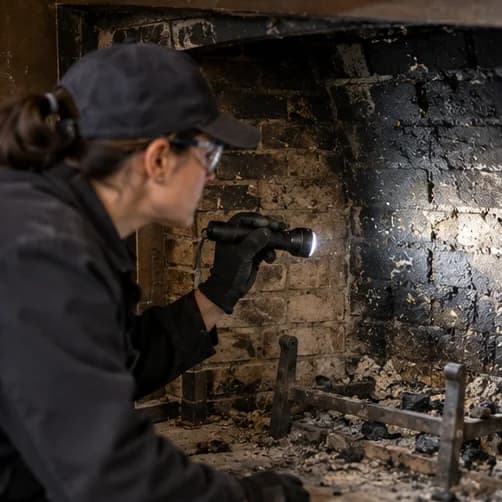
Describe what has stayed the same
Bring the appliance identity, fuel, operating history and previous report. A new owner may not know what was changed by an earlier owner; uncertainty is useful information, not a reason to fill the gaps with assumptions. Ask the inspector whether the history supports the proposed level.
Clarify accessible areas
Ask which connections and portions can be examined without opening construction. An obstructed access panel or concealed connector can leave a question unanswered. The written report should distinguish examined components from inaccessible ones.
Separate inspection and sweeping
An assessment may identify deposits requiring removal, but cleaning is a separate operation unless included in the estimate. Ask whether a return visit or additional inspection will be needed after deposits are removed.
Escalate when findings change
If the technician finds evidence of a hidden concern, ask why a different scope is recommended and what additional access will accomplish. Agree the next step in writing; do not treat an incomplete assessment as approval to operate.
Keep a usable baseline
Retain the date, appliance identity, inspection level, findings and limitations. This gives a later technician a useful comparison after an appliance change or unusual operating event.
The evidence desk / Worked example
From a finding to a defensible scope
Illustrative homeowner scenario. This is not an actual inspection report or a prescription for your property.
A routine inspection identifies an area the technician cannot evaluate within the booked scope.
The useful result may be a documented limitation and a recommendation for additional assessment. A homeowner should understand why that next step is needed rather than assuming either that every inspection must escalate or that a routine visit guarantees hidden components are sound.
Ask for the missing evidence
- Confirm the system and routine inspection scope.
- Locate the specific area causing uncertainty.
- Ask what additional information a different inspection would provide.
Before authorizing the work
Ask whether the routine visit includes cleaning when needed, how the findings will be delivered and how additional work will be priced. The technician should explain a proposed change before proceeding with work outside the agreed appointment.
At completion
Retain the scope, accessible observations and any written recommendation. The record should distinguish inspected areas from assumptions based on the visible system.
Keep this question open
A Level 1 label does not answer every question about alterations, damage history or concealed conditions. Share new information and ask the professional to reconsider the scope when circumstances change.
The scope checklist
Use these items to compare written proposals for this service.
- Describe what has stayed the same
- Clarify accessible areas
- Separate inspection and sweeping
- Escalate when findings change
- Keep a usable baseline
Common exclusions to clarify
- Related appliance or building repairs unless expressly included
- Additional access or return visits outside the agreed scope
- Independent guarantees of future safe operation
Questions answered
Chimney service FAQs
When should I ask about level 1 chimney inspection?
A Level 1 inspection generally concerns readily accessible portions of a system continuing in the same use. Tell the inspector about any change, malfunction or damaging event before accepting this scope. A lower inspection level is not a certificate covering hidden construction.
What should be recorded before work starts?
Bring the appliance identity, fuel, operating history and previous report. A new owner may not know what was changed by an earlier owner; uncertainty is useful information, not a reason to fill the gaps with assumptions. Ask the inspector whether the history supports the proposed level.
What should I keep after the visit?
Retain the date, appliance identity, inspection level, findings and limitations. This gives a later technician a useful comparison after an appliance change or unusual operating event.
Check the source
References & further reading
- CSIA: chimney inspection levels (historical overview, 2000) ↗
Historical background on inspection levels; not the current code text. Confirm the applicable edition and scope with the inspecting professional.
Published by Chimney Sweep Guide. General homeowner information; no claim of an on-site inspection or professional certification. Suggest a correction.