Name the unresolved question
Ask what evidence suggests a concealed concern, where it may be located and why less invasive access is insufficient. A useful proposal connects the opening to a specific investigative question.
Agree the access boundary
Identify the surfaces or components that may be removed and how the work will be contained. Discuss occupants, belongings and access restrictions. Photographs of the area before opening help document its initial condition.
Separate investigation from restoration
Opening a wall and restoring a wall are different tasks. Confirm who repairs finishes, disposes of debris and coordinates any additional trades. Avoid assuming the inspection charge includes every resulting repair.
Document decisions during the work
Unexpected findings can change the necessary opening. Establish who can authorize additional work and how revised cost and scope will be recorded. Ask for evidence before approving a wider investigation.
Close the information gap
The final record should show what was exposed, what was found, what remains unresolved and the recommended next action. Do not restart an affected appliance simply because the investigative opening has been closed.
The evidence desk / Worked example
From a finding to a defensible scope
Illustrative homeowner scenario. This is not an actual inspection report or a prescription for your property.
The contractor proposes opening a concealed area to investigate a suspected problem.
Opening finishes changes the project. The owner needs a written explanation of the concern, the proposed investigation boundary and who will restore the opening. An investigative authorization should not silently become permission for every repair that might be discovered.
Ask for the missing evidence
- Locate the suspected concern and explain why existing access is insufficient.
- Specify what will be opened and how the investigation will be documented.
- Name the party responsible for making good disturbed finishes.
Before authorizing the work
Agree on access, protection, investigation, reporting, restoration and the decision point for additional work. Ask how unexpected findings will be priced and approved, and whether other trades or building permissions are needed for the opening.
At completion
Retain photographs before, during and after access, the findings, and a record of any repair separately authorized. Note any opening that still awaits restoration.
Keep this question open
If investigation stops short of resolving the suspected condition, ask for that limitation in writing. A larger opening or another trade should be a reasoned next step, not an unexplained continuation.
The scope checklist
Use these items to compare written proposals for this service.
- Name the unresolved question
- Agree the access boundary
- Separate investigation from restoration
- Document decisions during the work
- Close the information gap
Common exclusions to clarify
- Related appliance or building repairs unless expressly included
- Additional access or return visits outside the agreed scope
- Independent guarantees of future safe operation
Questions answered
Chimney service FAQs
When should I ask about level 3 chimney inspection?
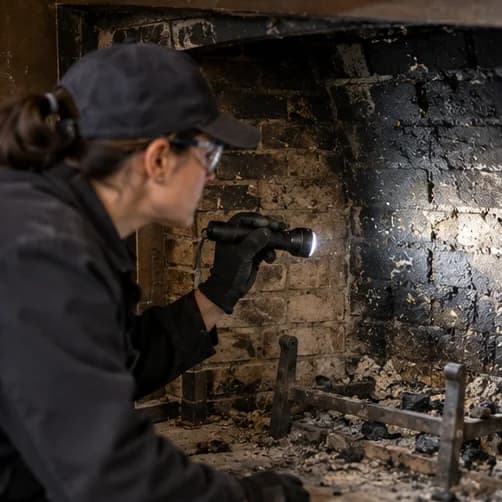
A Level 3 inspection may involve opening or removing construction to investigate a suspected hazard that cannot be adequately evaluated at lower levels. It is not a routine upgrade to buy without an identified purpose.
What should be recorded before work starts?
Ask what evidence suggests a concealed concern, where it may be located and why less invasive access is insufficient. A useful proposal connects the opening to a specific investigative question.
What should I keep after the visit?
The final record should show what was exposed, what was found, what remains unresolved and the recommended next action. Do not restart an affected appliance simply because the investigative opening has been closed.
Check the source
References & further reading
- CSIA: chimney inspection levels (historical overview, 2000) ↗
Historical background on inspection levels; not the current code text. Confirm the applicable edition and scope with the inspecting professional.
Published by Chimney Sweep Guide. General homeowner information; no claim of an on-site inspection or professional certification. Suggest a correction.